
Find the darkest sky, and see what it'll look like
The Milky Way needs real darkness, no Moon and clear skies. Starglow finds the darkest places near you, ranks them by tonight's cloud, and shows you the sky over the real skyline before you go.

The Milky Way checklist
Miss one and the band of the galaxy fades into the sky.
- 1True darkness
- The sun 18° below the horizon: astronomical night. Starglow’s Dark Sky alert tells you when it starts.
- 2No Moon
- Even a gibbous Moon lights the whole sky. The Moon row shows when it’s up; aim for the hours it isn’t.
- 3Clear at every altitude
- Thin high cloud you’d barely notice washes out the Milky Way. Check all three cloud layers, and transparency.
- 4A dark site
- Get away from city light. The Dark Site Finder ranks the darkest places nearby by tonight’s cloud.
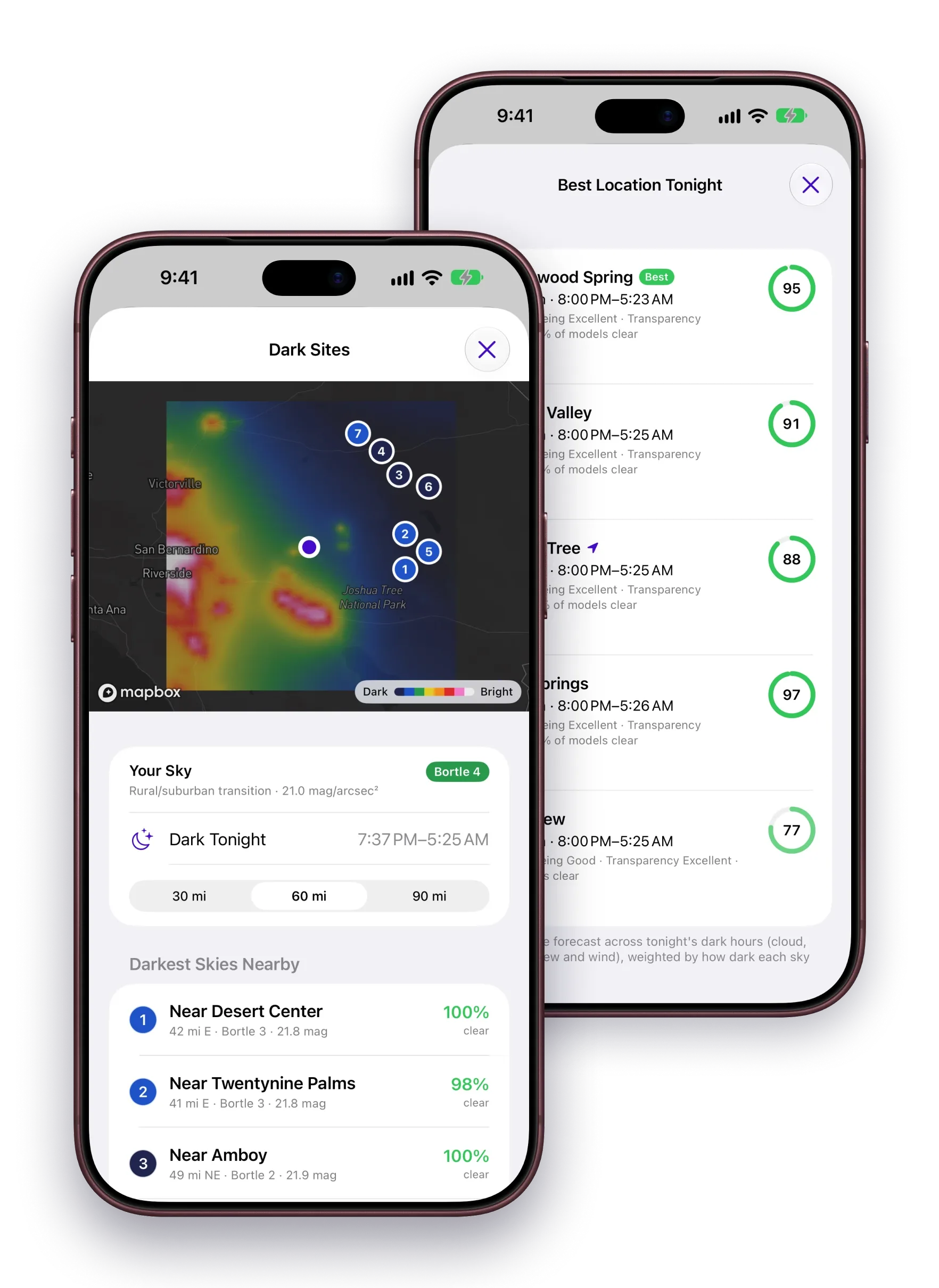
Dark Site Finder
Part of Starglow Pro.
- Light pollution
- A map from NASA satellite data around wherever you are.
- Your sky
- Its Bortle class and sky brightness, and tonight’s dark window.
- Darkest skies nearby
- Within 30, 60 or 90 miles, each with its distance, Bortle class and how clear it’ll be tonight. Save one straight to your locations.
- Best location tonight
- Your saved spots compared, so you know which will be clearest and darkest.
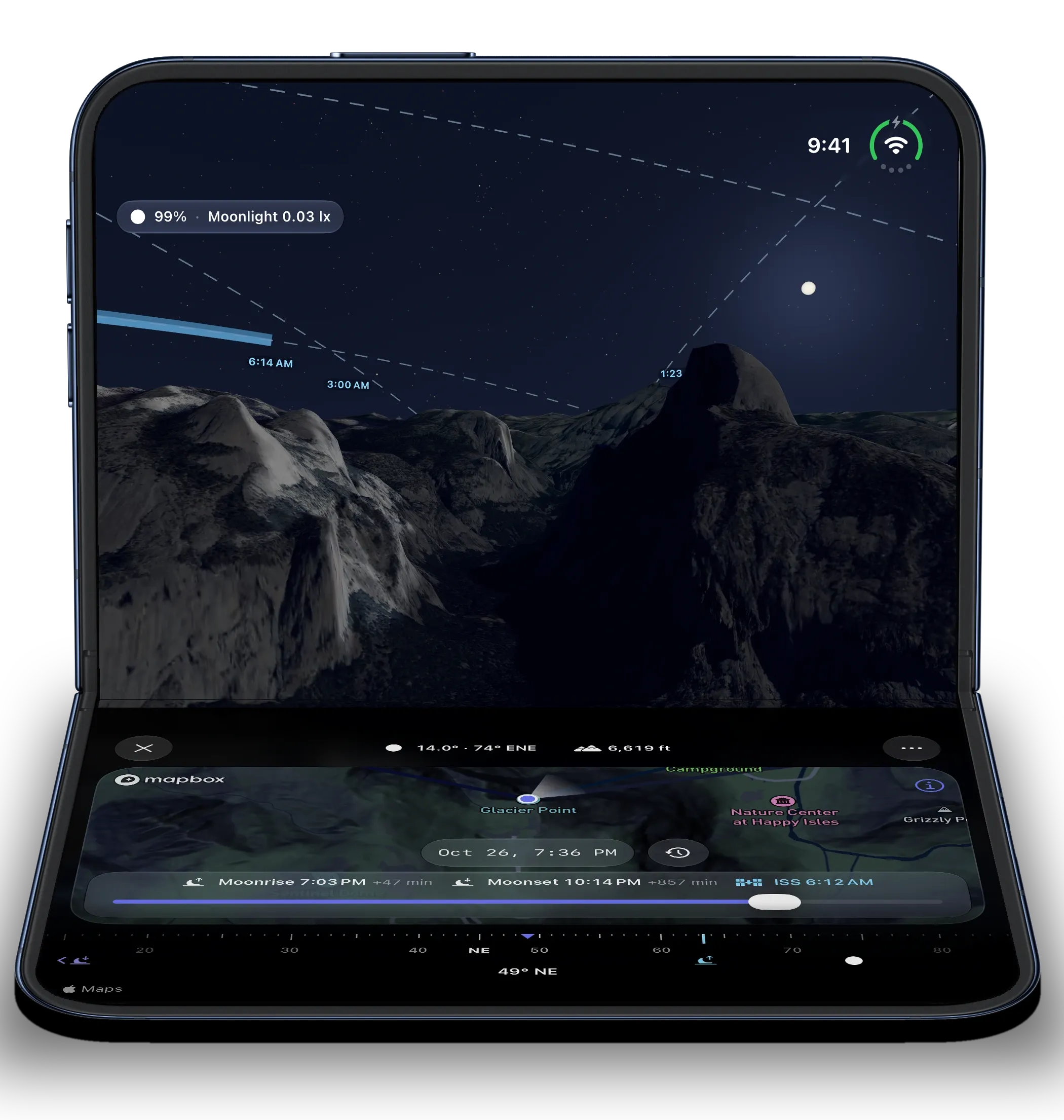
Vantage Point
Long-press the map to stand anywhere and look around the real terrain and buildings, with the Moon, stars, planets, the Milky Way and ISS passes exactly where they'll be at any time, on screen or in AR.
Scout a composition from your sofa: see whether the core clears that ridge, and when the Moon drops behind it.
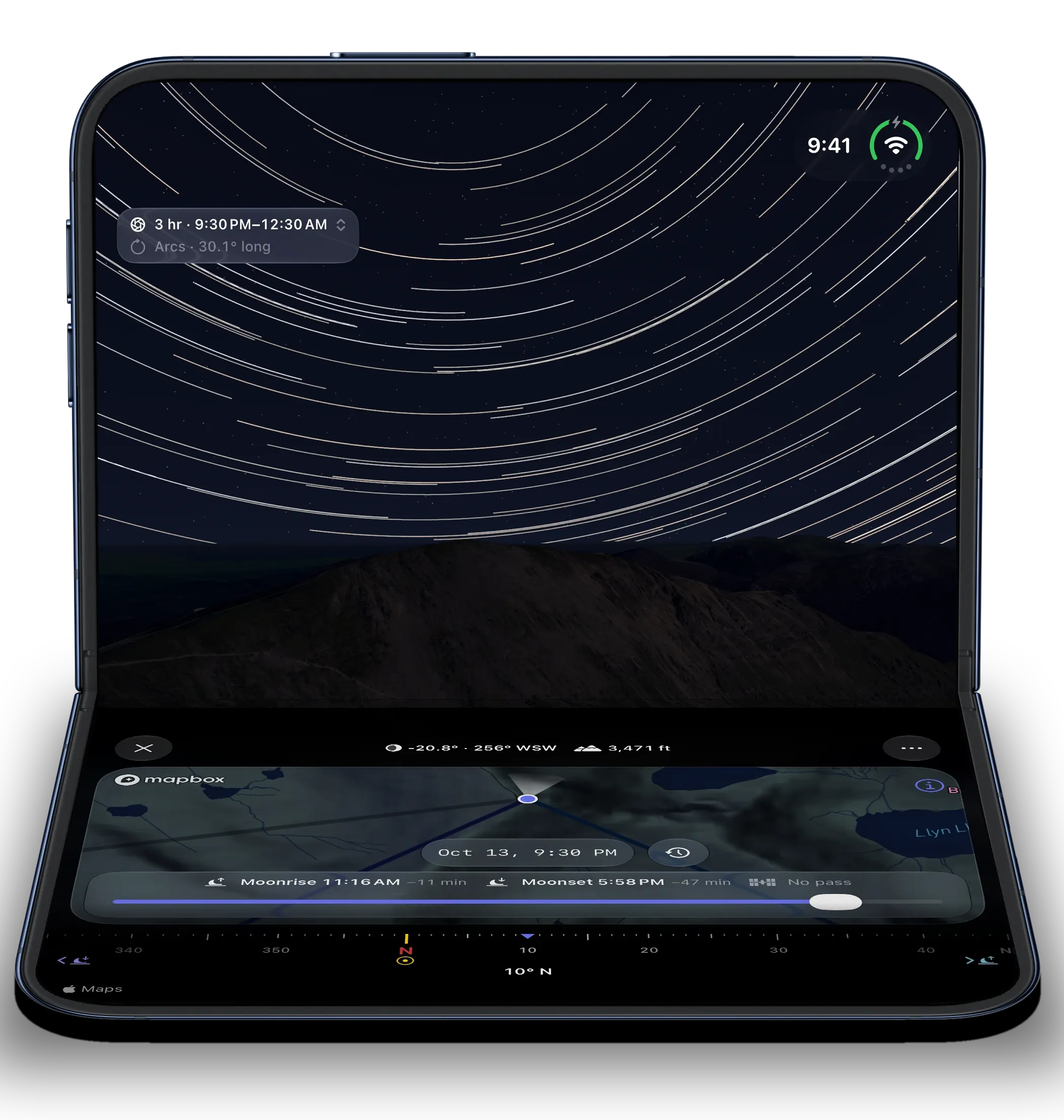
Star Trails
Plan a long exposure before you open the shutter. Pick how long it stays open and Starglow draws every star's trail over the real skyline, how long the trails will be wherever you point, and whether twilight, the Moon or an ISS pass will cross the frame.
Milky Way season
The faint band is up all year, but the bright core is only in the night sky for part of it.
- Northern Hemisphere
- Core visible late February – October; best placed June – August, around local midnight.
- Southern Hemisphere
- Core visible February – October; best placed May – August, high overhead.
Get Starglow free on your iPhone
Cloud, the Moon, the ISS and darkness, hour by hour, with alerts when it matters.
Questions
How does the Dark Site Finder work?
It maps light pollution around you from NASA satellite data, tells you your sky's Bortle class and sky brightness, shows tonight's dark window, and lists the darkest places within 30, 60 or 90 miles ranked by tonight's cloud. It's part of Starglow Pro.
What is Vantage Point?
Long-press the map to stand anywhere and look around the real terrain and buildings, with the Moon, stars, planets, the Milky Way and ISS passes where they will be at any time, on screen or in AR. It is part of Starglow Pro.
Can Starglow help me plan star trails?
Yes. In Vantage Point, choose how long the shutter stays open and Starglow draws every star's trail over the real skyline, how long the trails will be wherever you point, and whether twilight, the Moon or an ISS pass will cross the frame.
What moon phase is best for the Milky Way?
New Moon and the few nights either side. A waxing crescent sets soon after the sun and a waning crescent rises shortly before dawn, so both leave most of the night dark. Turn on the New Moon alert to get a reminder.
What is Best Location Tonight?
A Pro feature that compares your saved locations and shows where tonight will be clearest and darkest.
Where to next
Moon Map & AR
Phase, moonrise, moonset and its path
ISS Passes
Visible passes, brightness, and AR paths
Astrophotography Weather
Cloud layers, seeing and transparency
Moon Direction Map
Moonrise, moonset and the Moon’s bearing for any place, free on the web
Starglow Pro
Everything Pro adds, next to what’s free
Download Starglow
Check tonight's sky before you head out.
Available on iPhone, iPad, Apple Watch & Apple Vision Pro.